Your Instance Is Starting. Please Try Again in a Few Minutes. Error Frame?
Sooner or subsequently, every website runs into a problems or error that'south difficult to troubleshoot. Often, that's because the error itself doesn't give yous many details. The 429 Likewise Many Requests mistake is one such instance.
We know what its most common causes are, fortunately. Since in that location are several potential culprits, nonetheless, you'll frequently demand to endeavour more one fix earlier you lot can resolve it.
In this article, nosotros're going to talk about what causes the 429 Too Many Requests fault and what information technology looks like. Then nosotros'll get over five ways you can troubleshoot your website if you ever run into this detail consequence. Allow's get to piece of work!
- What is the HTTP 429 Mistake
- What Causes the 429 Too Many Requests Error
- How to Fix the 429 Also Many Requests Mistake (5 Methods)
How to Fix 429 Also Many Requests in WordPress:
You're receiving the 429 Too Many Requests fault message because the user has sent also many requests in a given amount of time (could be a plugin, a DDos, or something else). Information technology'due south a server telling you to please stop sending requests.
To set up it in WordPress, attempt i of these 5 methods:
- Modify your WordPress default login URL
- Cheque whether your HTTPS internal links are causing the issue
- Deactivate all your WordPress plugin
- Switch to a default WordPress theme
- Contact your hosting provider
What is the HTTP 429 Error?
The HTTP 429 fault is returned when a user has sent too many requests inside a short period of time. The 429 status code is intended for use with rate-limiting schemes.
What Causes the HTTP 429 Too Many Requests Mistake
In some cases, when your server detects that a user agent is trying to admission a specific page too ofttimes in a short period of time, it triggers a rate-limiting feature. The about common example of this is when a user (or an aggressor) repeatedly tries to log into your site.
Nevertheless, your server may also identify users with cookies, rather than past their login credentials. Requests may also exist counted on a per-request basis, across your server, or beyond several servers. And so there are a variety of situations that can result in yous seeing an error like 1 of these:
- 429 Too Many Requests
- 429 Fault
- HTTP 429
- Fault 429 (Too Many Requests)
The mistake may also include additional details regarding the reason for the 429 status lawmaking, and how long the user must expect earlier attempting to log in again. Here's an example of what that might look like:
HTTP/1.one 429 Too Many Requests Content-type: text/html Retry-After: 3600 <html> <head> <title>Besides Many Requests</title> </head> <body> <h1>Too Many Requests</h1> <p>I just permit 50 requests per hr to this website per logged in user. Effort again soon. </p> </body> </html> Regardless of how the error appears, it ever means the aforementioned thing – there's a user or a snippet of code that's overwhelming your server with too many requests. Sometimes, the trouble can go away on its ain. In other situations, such as those caused by problems with a plugin or Denial of Service (DDoS) attacks, you lot'll demand to be proactive in order to resolve the error.
The problem is that the 429 error most often affects your login page, which tin can make it impossible for you to access your website's dashboard. That tin can make fixing information technology a trivial tricky, but information technology's even so achievable if yous know what to try.
How to Gear up the 429 Too Many Requests Error (5 Methods)
Every bit you might imagine, we deal with a lot of WordPress support requests due to the nature of the services we offering. That means we're intimately familiar with the 429 error, and its many potential causes.
In the following sections, we'll cover v of the most common causes we've seen for the 429 Besides Many Requests error in WordPress. For each potential issue, nosotros'll also teach yous how to go about fixing it, so you lot can get your site support and running quickly.
1. Change Your WordPress Default Login URL
Brute-force login attempts are one of the leading causes of the 429 error on WordPress websites. One quick way to prevent attackers from trying to intermission through your WordPress login page is to change its URL from the default option, so they can't find information technology in the first identify.
By default, yous can discover your login page by navigating to yourwebsite.com/wp-admin. That's pretty piece of cake to recollect, but information technology's too downright insecure since anybody on the web volition know exactly where to access it.
The easiest way to change your default WordPress URL is by using the free WPS Hide Login plugin:
Allow's walk through the process of using this item tool. You'll outset want to install and activate the plugin merely every bit you would whatever other, and so navigate to the Settings > WPS Hide Login tab in your WordPress dashboard:
Subscribe At present
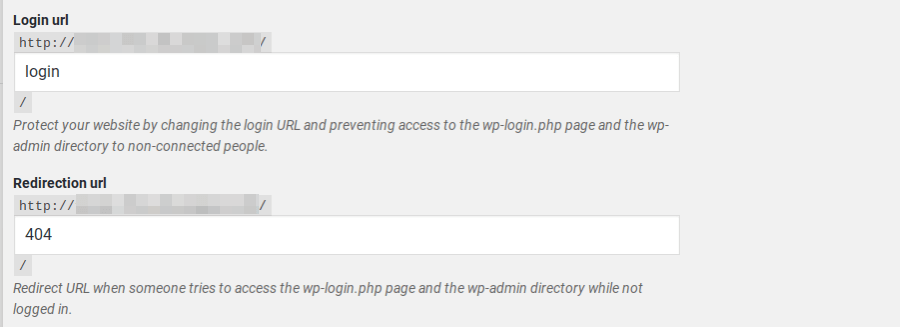
Here, you lot tin hands alter your login URL by typing in whatsoever extension you'd like to use. Make sure to stay away from easy-to-guess options such as login, wp-login, and so on. This would defeat the purpose of changing your URL in the first place, and so you'll want to come with something unique to your site.
Annotation that this plugin as well enables you to redirect users who try to access your erstwhile login URL to another folio. For example, the default option will show anyone who tries to visit /wp-admin a 404 error page, so they'll know they're looking in the wrong place. When you're done, call up to relieve the changes to your settings, and you'll be good to go.
ii. Disable the Actually Elementary SSL Plugin and Supersede Your Internal Links
These days, in that location'southward no practiced reason yous shouldn't take a Secure Sockets Layer (SSL) certificate gear up upward for your website. Likewise, your unabridged website should load over HTTPS. This is far more secure than using the older HTTP protocol, and information technology can even have a positive effect on your site'south Search Engine Optimization (SEO).
When information technology comes to enforcing HTTPS employ, you can either use the manual road – such as an .htaccess redirect – or a plugin. I of the most popular choices is Really Simple SSL:

This plugin's entreatment is that it forces your entire website to load over HTTPS with just a couple of clicks. However, in our experience, it can also lead to occasional bugs. For instance, under some circumstances, information technology can trigger the 429 error nosotros've been talking about.
At that place's nothing inherently wrong with this plugin, but it'due south definitely non the all-time way to implement HTTPS use. The problem is that, even if you implement HTTPS manually, y'all're still left with the problem of what to do about internal links. Chances are there are a lot of internal links throughout your website, and so you'll demand to observe a way to replace all of them with their HTTPS versions after disabling the plugin.
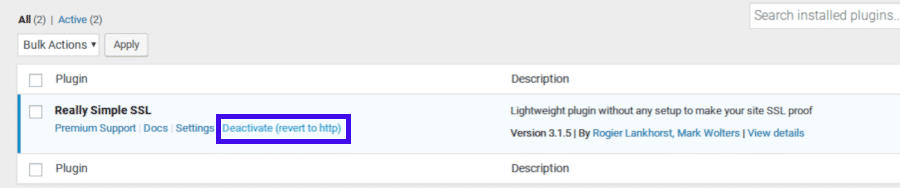
First, you'll want to take care of the plugin itself. If you lot accept admission to the WordPress admin expanse, disabling Actually Simple SSL shouldn't be an event – just hit Deactivate and you're done:
Notwithstanding since the 429 Too Many Requests Error frequently blocks y'all from accessing your dashboard, you might have to have the transmission road and disable the plugin using an FTP customer.
Either way, once the Really Simple SSL plugin is gone, the 429 error should be resolved. That means yous tin access your dashboard to fix a new plugin, which will help you supervene upon all of your internal links in 1 dive. That plugin is called Search and Supersede:

Go alee and actuate the plugin, then navigate to the Tools > Search & Replace tab in WordPress. Inside, select the wp_postmeta table, and then enter the post-obit parameters alongside the Search for and Replace with fields respectively:
If your site uses a non-www domain:
http://yourwebsiteurl.com
https://yourwebsiteurl.com
In some cases, there may be www instances of your domain in the database every bit well, so we likewise recommend running another search and replace with the settings below.
http://www.yourwebsiteurl.com
https://yourwebsiteurl.com
If your site uses a www domain:
http://www.yourwebsiteurl.com
https://www.yourwebsiteurl.com
To supervene upon non-world wide web instances of your domain in the database, run another search and replace with the settings beneath:
http://www.yourwebsiteurl.com
https://yourwebsiteurl.com
Then select the dry run choice, which volition let you know how many instances of your HTTP URLs the plugin volition supersede within your database. After that dry out run, execute the plugin for existent and it volition replace all the necessary links.
Keep in listen that after disabling the Really Uncomplicated SSL plugin, you'll also need to prepare up a site-broad HTTPS redirect using your .htaccess file. This will enable you lot to implement HTTPS effectively, without the adventure of further 429 errors.
three. Temporarily Conciliate All of Your WordPress Plugins
So far, we've focused on a single plugin that may cause the 429 error. However, in do, any plugin could cause this result if it makes too many external requests. If neither of the in a higher place methods leads to a solution in your instance, it may exist time to endeavor disabling all of your plugins at once, to ensure that they aren't the problem.
For this section, we'll assume you don't have admission to your dashboard and can't disable plugins the usual way. In that case, you'll demand to access your website via FTP using a customer such as Filezilla, and navigate to the public_html/wp-content/ directory.
Inside, there should be several folders, ane of which is chosen plugins:
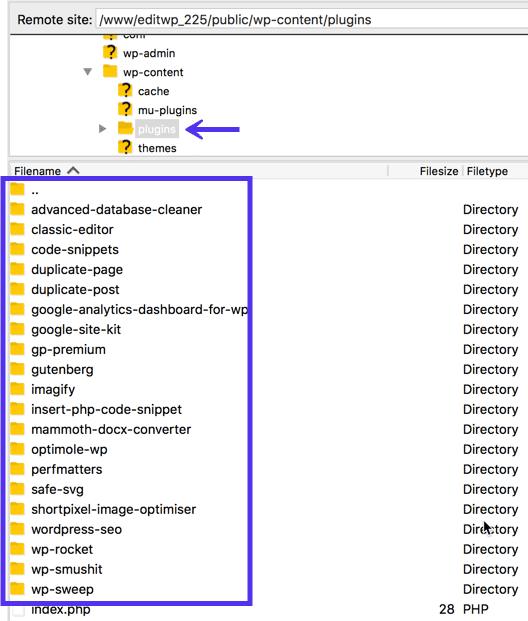
Correct click on that binder, and change its name to something else, such as plugins.deactivated. In one case you practice that, WordPress won't be able to 'detect' any of the plugins, and it will automatically deactivate all of them. However, before you endeavor to access your site over again, go alee and create a new empty folder called plugins, so WordPress will however role as normal.
If the 429 mistake is gone when you next visit your site, you can assume that one of the plugins you turned off was the culprit. That means yous need to narrow down which one acquired the problem. To practise that, you'll desire to:
- Delete the empty plugins directory y'all gear up a minute agone, and restore the previous folder to its original proper noun.
- Admission the plugins directory.
- Rename i of the plugin folders within to annihilation else, which will deactivate only that specific plugin.
- Try to access your website, and meet if the 429 fault is gone.
- If the error persists, return that plugin folder to its original name and repeat steps 3 and 4 with the next one.
By moving down your listing of active plugins one by i, you lot should somewhen discover which ane is the culprit. Once y'all figure out which plugin is behind the 429 Too Many Requests mistake, you can delete it altogether, which should fix the effect.
four. Switch to a Default WordPress Theme
If it turns out that a plugin isn't the crusade of your 429 fault, it'southward possible that your active theme might exist at mistake. To effigy out if that's the instance, you can disable your active theme manually, forcing WordPress to switch to ane of the default templates that ships with the CMS.
This process works much the same as disabling plugins manually. You lot'll want to launch your trusty FTP client once more, and this time navigate to the public_html/wp-content/themes directory. Once in that location, wait for the binder that corresponds to your agile theme and rename it to annihilation else yous desire.
If you try to access your website after that, the 429 Besides Many Requests error should be gone. You'll also notice that everything looks quite a fleck different. Don't panic, though, your theme and all of its customizations are still in that location.
All yous need to do is return the theme folder to its original name and activate it once more. If the 429 fault returns afterward, then you lot might need to contact the theme's developers or consider irresolute your site's theme and delete it eventually.
5. Contact Your Host If You Yet Can't Resolve the Error
In some instances, it'due south possible that the cause behind the 429 error originated with your server, rather than with your website itself. If this is the case for you, no amount of piece of work on your role will exist able to fully resolve the trouble.
For example, some spider web hosts volition cake requests from specific 3rd-party services or platforms. These tin include search engines, crawlers, and other apps (such as Google Search Console) that make large numbers of requests to your website.
Contacting your hosting provider and asking them to allow these requests can solve the issue. Additionally, fifty-fifty if limitations placed on your server past your host aren't the cause of the problem, they may be able to provide valuable insight and advice that can help you find the correct solution.
Summary
Encountering an fault on your website is ever frustrating. However, equally far as errors go, those with number codes at least requite yous enough information to commencement fixing them. If you run into the 429 Too Many Requests fault, you'll know that something is overwhelming your server with besides many requests, so it's only a affair of identifying what the source of the problem is.
If you practise happen to experience the 429 error, here are five ways you can get about troubleshooting it:
- Modify your default WordPress login URL.
- Disable the Really Simple SSL plugin.
- Temporarily deactivate all of your WordPress plugins.
- Switch to a default WordPress theme.
- Contact your host if you notwithstanding tin can't resolve the fault.
Do y'all have any questions almost how to fix the 429 Too Many Requests mistake in WordPress? Let's talk nigh them in the comments section below!
Salve time, costs and maximize site operation with:
- Instant help from WordPress hosting experts, 24/7.
- Cloudflare Enterprise integration.
- Global audience achieve with 29 data centers worldwide.
- Optimization with our built-in Application Performance Monitoring.
All of that and much more, in one programme with no long-term contracts, assisted migrations, and a thirty-twenty-four hour period-money-back-guarantee. Check out our plans or talk to sales to detect the plan that'due south right for yous.
Source: https://kinsta.com/knowledgebase/429-too-many-requests/

Post a Comment for "Your Instance Is Starting. Please Try Again in a Few Minutes. Error Frame?"